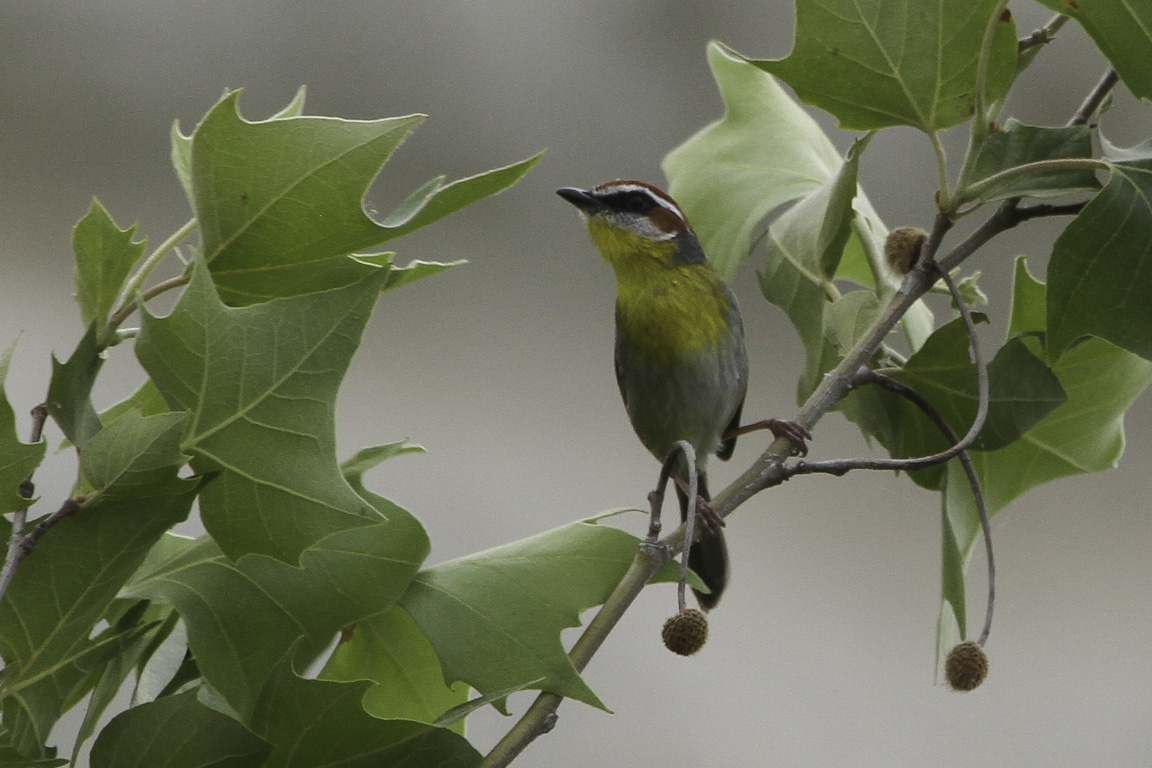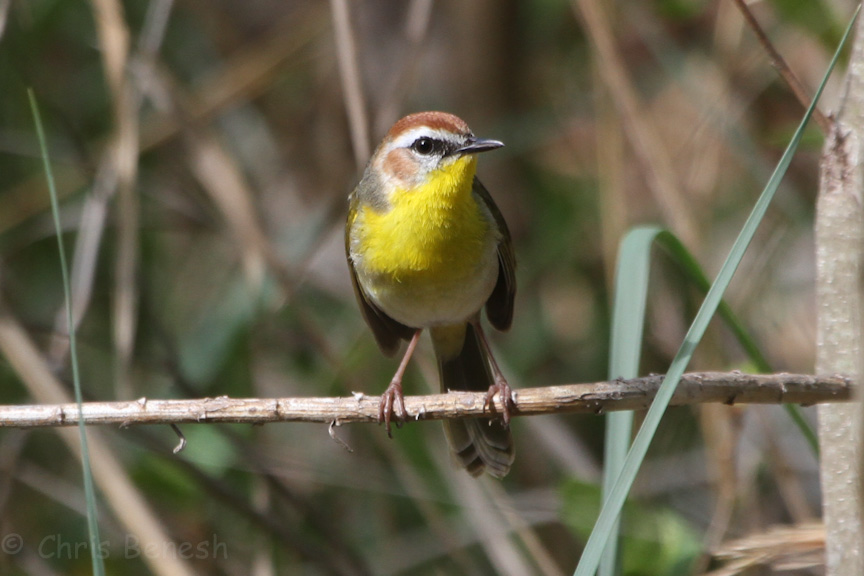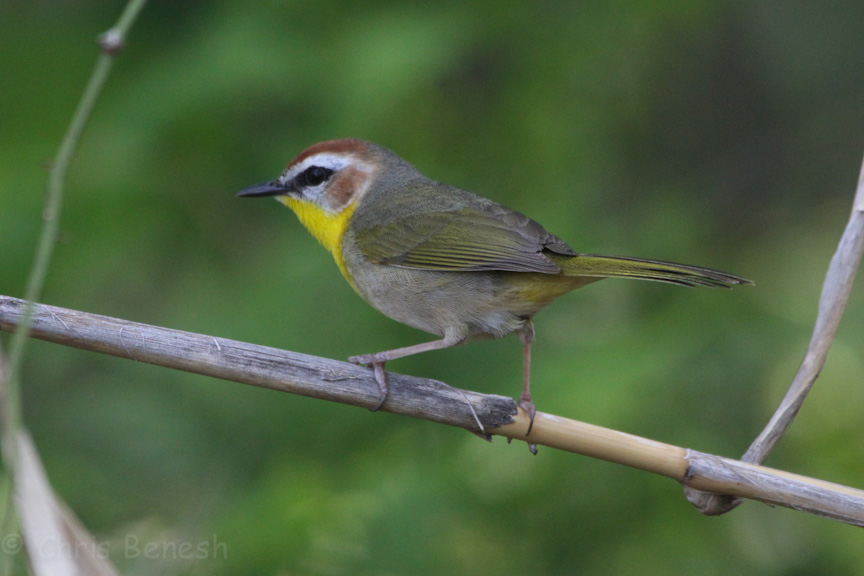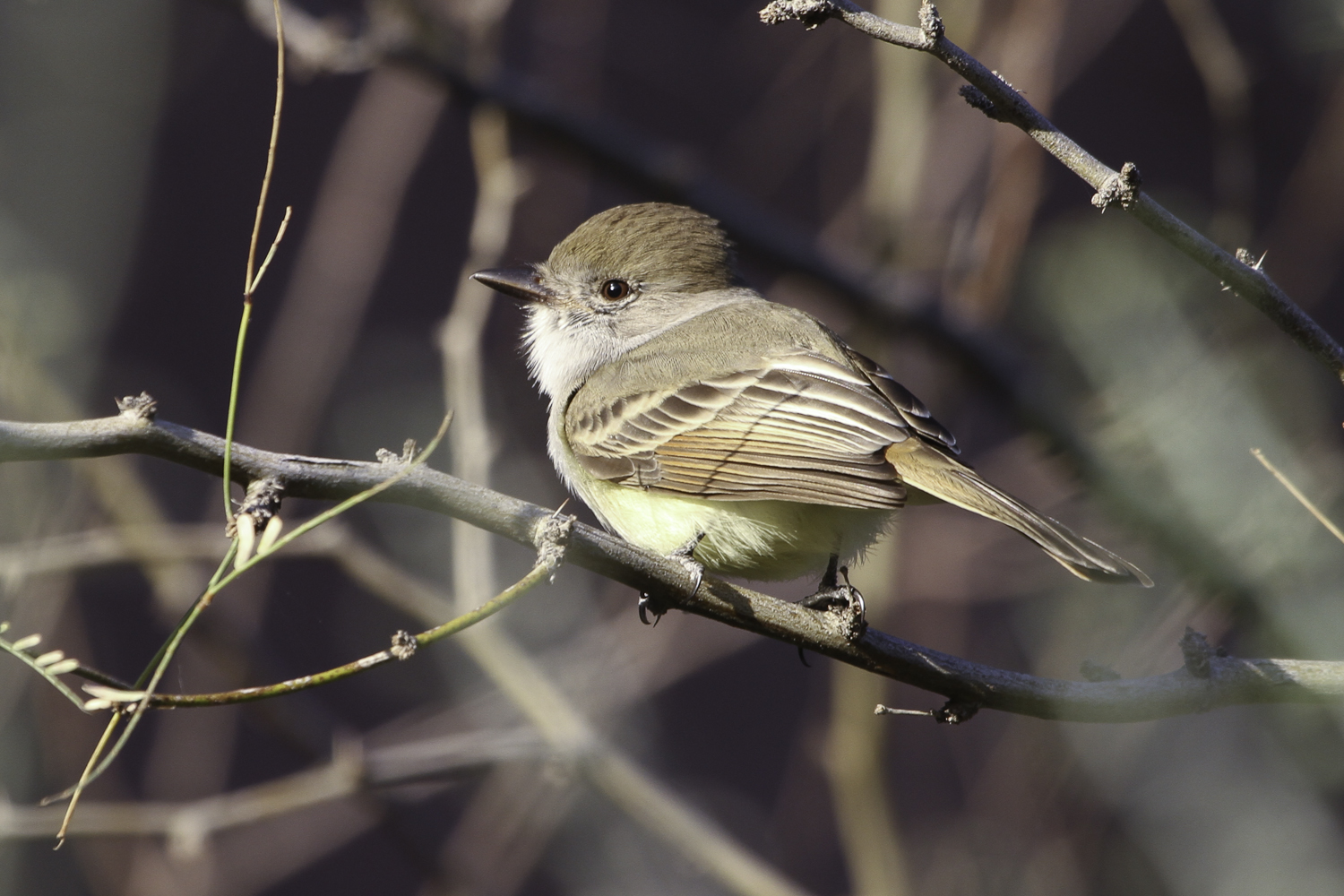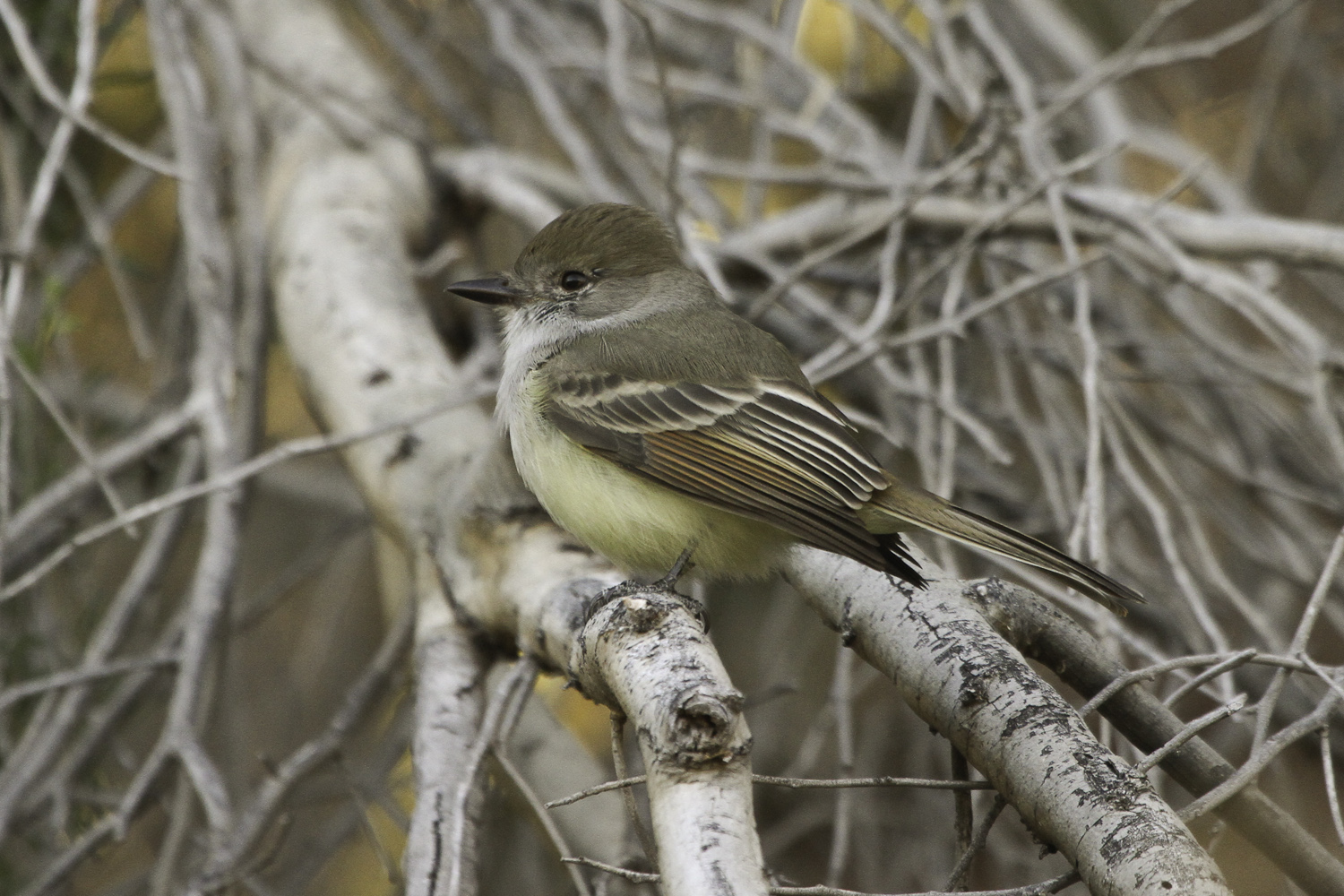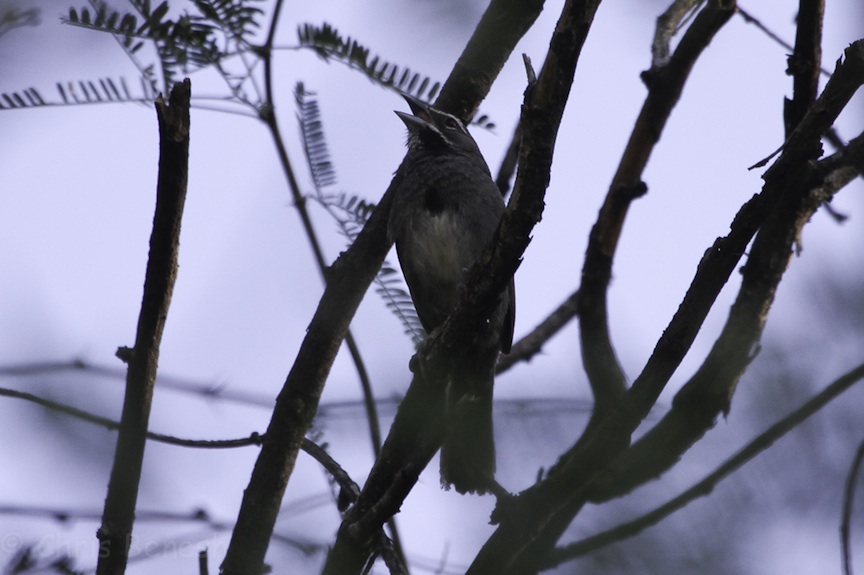
On January 17, 2012 I ventured back out to the Colorado River, Bill Williams Delta to look again for the Nutting’s Flycatcher first discovered by David Vander Pluym and Lauren Harter back in December. This time around I heard it within 30 seconds of stepping out of the car and had it in view in just a couple of minutes. I spent the next 45 minutes looking and listening as the bird caught some morning sun, gradually working its way northeast along the road. At times, it flew within a few feet of me. At times it was quite vocal too. Attached are photos and a recording from the morning. This was my third sighting of this species in the ABA area, and my second for Arizona.
Welcoming the new year, I’ve been listening around for new music. Thanks to the NPR Music iPhone App and WNYC’s Spinning On Air, I’ve been introduced to the music of Diane Cluck. She describes herself as an intuitive folk artist, a kitchen witch performing folk music guided by instinctual recipe. Her Facebook page lists her influences as 21st century American pain, greenstuff that grows through the concrete, textile history, crystals, minerals, fermentation, hair, shape / form, and retarded taboos. Here is a link to her WNYC Spinning On Air session. When you’ve got some time, have a listen.
If you like eclectic, like me, you might just find yourself loving her music. I was, to be cliche, blown away. I find her melodies playing out in my head, and her lyrics touch me in unpredictable ways. Just the sort of stuff that leaves you wanting more. Now Diane Cluck has embarked on an ambitious project to bring new music to her fans. If you like her sound, consider supporting her song-of-the-week project, which if properly funded, will deliver new music to her fans over six months beginning in March! Here are some videos showcasing her performance and explaining her song-of-the-week project.
This morning I went birding at Sweetwater Wetlands in Tucson. While scanning through a bunch of ducks in search of a female Eurasian Wigeon, I found an interesting hybrid duck hanging out with some Gadwall. It was a combination I’d seen once before in south Texas. Known as a Brewer’s Duck, this is a hybrid between Mallard and Gadwall. Audubon illustrated it in fact, and described it as Anas breweri.
This past week, I took a rare vacation to Chicago to see one of my favorite music artists in concert. Steven Wilson is the front man and musical kingpin for the group Porcupine Tree. Far from mainstream, Steven Wilson makes great music that does not appeal to the masses. Having released his second solo record in September, he decided to do his first ever solo tour featuring music from Insurgentes and Grace For Drowning. For his tour, Wilson had assembled a great group of musicians. Among these was Aziz Ibrahim, a British guitarist born to Pakistani parents. I was ashamed to learn that despite being an established musician, Aziz was denied a work visa to tour the United States with Wilson’s group, no doubt because of his Pakistani ties. His guitar duties had to be taken over at the last minute by longtime Porcupine Tree sideman John Wesley. Most notably for me, drumming duties were taken on by Marco Minnemann, a German-born drummer with amazing talent – widely regarded as one of the most talented and innovative drummers around. Rounding out the band were bassist Nick Beggs, keyboardist Adam Holtzman, and wind instrumentalist/keyboardist Theo Travis.
Earlier on concert day, I did a real fanboy thing and paid a visit to FYE, a local record store where Steven Wilson was doing a signing/greeting stint. So I bought the requisite copy of Grace For Drowning and had Steven Wilson sign it and take a photo op with me. Later, I headed down to the Park West theater to queue up for the concert. Talking with others in line, there was a real mix of folks, all devoted Steven Wilson/Porcupine Tree fans. Some had traveled similarly great distances to see the show.
The concert itself was truly amazing. I wasn’t sure how some of the material would come across live, but it exceeded any expectation I had. The visuals were wonderful, and a quadraphonic sound system provided a really clear sound for a live setting. The opening song, No Twilight Within the Court of the Sun, is not a favorite of mine, but it really shined live. Marco Minnemann stepped onstage first and began laying down the backbeat, joined a minute later by bassist Nick Beggs to set down the groove. Over the next few minutes, the remainder of the band stepped out, each adding additional layering to the tune until finally Steven Wilson appeared onstage. The remainder of the set included:
Index
Deform to Form a Star
Sectarian
Postcard
Remainder The Black Dog
Harmony Korine
Abandoner
Like Dust I have Cleared From My Eyes
No Part of Me
Veneno Para Las Hadas
Raider II
Get All You Deserve
Below are some videos from the tour. The first is one I shot with my iPhone that features a few snippets from the night in Chicago. It begins with Marco Minneman and Nick Beggs laying down the beat to No Twilight Within the Court of the Sun; a section from Sectarian; some of Harmony Korine; some frenetic drumming from Raider II; and some guitar distortion from the closer, Get All You Deserve.
Other videos are live recordings made when Steven Wilson performed this show in London. Enjoy!
It’s happened to all of us at some point. Last night, I got stuck on a Southwest flight with some really loud, self-absorbed passengers. Listen to this recording of just a few of the highlights from this late night flight from Denver to Chicago.
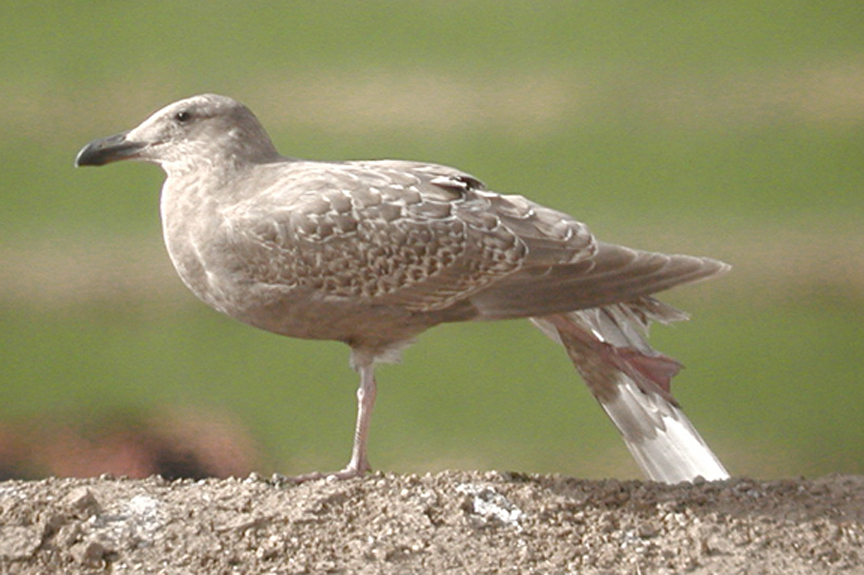
On November 9th, Tommy DeBardeleben found a young gull at the Glendale Recharge Ponds west of Phoenix that he initially took to be an odd Herring Gull. Sensing that something was odd, he sent photos around to others for opinion, and a quick consensus developed that the bird was in fact, a young Glaucous-winged Gull. This species is exceptionally rare in Arizona, with only six previous records for the state. Prior to Tommy’s sighting, the last Glaucous-winged Gull to appear in Arizona was eight years earlier, when one showed up in Palo Verde (see last image below). And prior to that, the most recent was back in 1981!
On November 13th, I headed to Glendale to look for the bird with fellow Tucson birder Deb Finch. Arriving at the recharge ponds, we quickly found others viewing the bird. The large, heavy-billed, chunky gull was in juvenile plumage, with essentially no replaced, second-generation feathers evident. Glaucous-winged Gull is closely related to Western Gull, and Glaucous-winged X Western and Glaucous-winged X American Herring hybrids are a common sight in wintering areas on the west coast. Because of this, extralimital birds are always scrutinized for hybrid characteristics. Determining what constitutes pureness in Glaucous-winged Gull is a bit like chasing rainbows. Most measures are subjective and in a birding context, heavily influenced by lighting conditions. Hybridization rates are really high in some areas in California and the Pacific northwest, and there may be no such thing as a completely pure individual. So subjective determinations are made as to what constitutes a hybrid for birders. Certainly there are clear cut examples, with birds that are pretty much intermediate between classic forms of the two species (where primary tips, secondaries, and tail are clearly and distinctly darker than the rest of the upperparts). But what of birds that appear just slightly darker, or have slightly more coarsely-patterned upperparts? Tough to say. The Glendale bird is darkish, but so are many young gulls in October and November. Flight shots do not reveal any really troubling features (i.e. darker primaries, secondary bar, or darker tail), and seem consistent with a juvenile Glaucous-winged Gull. If this gull were to be seen along the California coast at this season, it would be identified as a Glaucous-winged Gull by most without much hesitation.
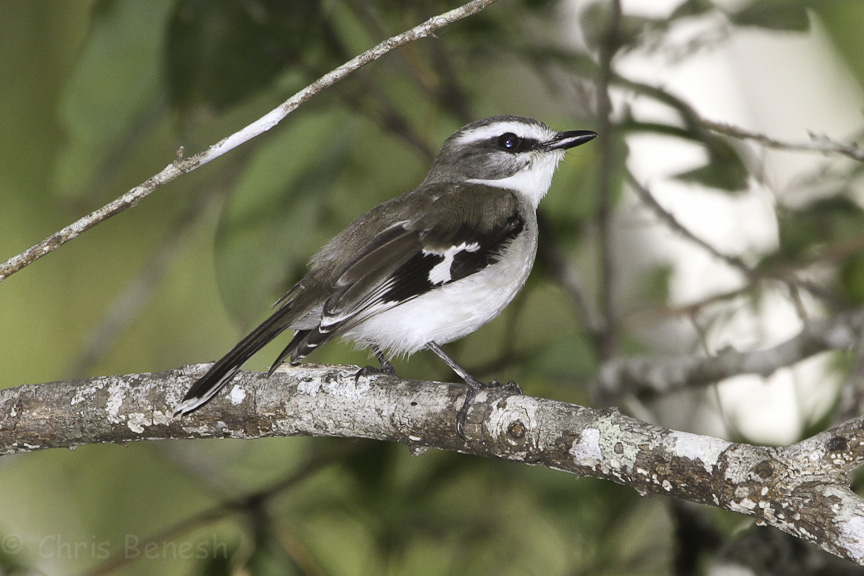
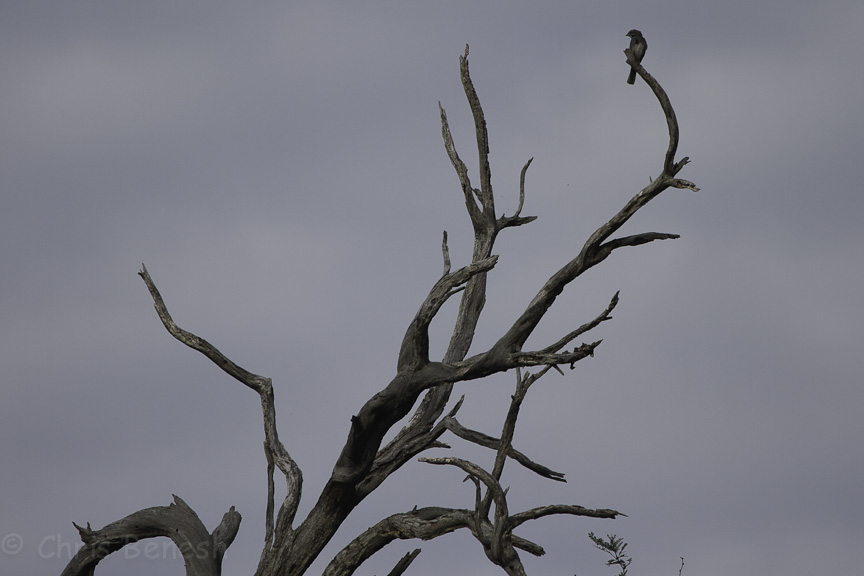
I recently returned from a wonderful trip to Australia. While I am fortunate to get to visit there each year, it had been a few years since I had done the northern and eastern sections where there were still a few lifer possibilities for me. Topping my list of want-to-see birds that I could reasonably expect was the sprightly White-browed Robin, Poecilodryas superciliosa. While not a rare bird, per se, it is a scarce bird along our tour route, with specific tastes in habitat, namely dense riparian gallery woodland and monsoonal forest. And for one reason or another, our paths had not crossed in previous years. And so as I set off for this year’s Australia visit, I set my sights on connecting with this little gem to privately help lift my flagging spirits.
With our local guide and driver Jun Matsui, we headed to Big Mitchell Creek, a traditional site for the robin located along the western edge of the Atherton Tableland between Mareeba and Mount Molloy. Luck was with us, for within ten minutes of arriving, we could hear one calling along the creek. After trekking over in that direction, we soon found a pair of birds. What a fabulous sight! Attached is a shot of one as well as a recording of its call. More than enough to lift my spirits for a time.
A Five-striped Sparrow sings from a snag in Montosa Canyon on August 14th.
A singing Five-striped Sparrow discovered August 27th at the Circle Z Ranch south of Patagonia.
It seems that Arizona always has a few surprises in store for birders. For the past 25 years or so, California Gulch and adjacent Sycamore Canyon have been the traditional sites to track down the extremely localized Five-striped Sparrow in Arizona. Prior to that time, birds could be found on the west side of the Santa Rita Mountains in Chino Canyon and south of Patagonia on private property across Sonoita Creek from the roadside rest area. On August 2 of this year, Melody Kehl discovered a singing Five-stripe in Montosa Canyon, a west-facing slope due south of Chino Canyon in the Santa Ritas. While there had been several isolated sightings of birds in this range in recent years, this was the first indication of local breeding in many years.
As luck would have it, I attended a business meeting this week at the Circle Z Ranch south of Patagonia, site of a former colony of Five-striped Sparrows (the first such colony in the United States). Since territorial birds were in evidence in the Santa Ritas for the first time in years, my colleagues and I decided to check the ranch for Five-stripes. Sure enough, a quick check on August 27th revealed at least one Five-stripe on territory there! Adventurous birders might consider checking other former sites in the next couple of weeks, such as Chino Canyon, and maybe even visit Pima Canyon in the Catalinas, where one was seen years ago.
This sure seems to happen a lot. While birding in the Sulphur Springs Valley this morning, I noticed a bunch of Western Kingbirds around. I mentioned to my group that they should be on the lookout for Scissor-tailed Flycatcher and Eastern Kingbirds because, though rare in AZ, those two species occasionally get in with these big Western Kingbird congregations. Less than a minute later, I spotted a Scissor-tailed Flycatcher flying across a field to everyone’s amazement. I can think of a number of times that has happened to me just after speaking about the possibility of something showing up.
Yesterday, I had a chance to get out and do a bit of birding with a couple of friends from Minnesota. High up on their desired bird list was Five-striped Sparrow, so we headed off to the back country west of Nogales to pay a visit to California Gulch, home to a small colony of Five-stripes. Thanks to some recent rains, the sparrows were singing quite a bit, and in the end, we encountered perhaps as many as six individuals. Later that afternoon, we paid a visit to a few sites in Patagonia, where the image of the Broad-billed Hummingbird was taken.